
Njoku Nonso
4 poems
Hypothetically Speaking
Forget science. It starts with the sound,
the sound the sound makes.
Her pale, sylphlike hands, the swift
scoop from the mound to the crater.
Whatever it is, you know it’s searingly hot and inconsolable.
Whatever it is, you know
I am your most cherished kill. Turn the horse’s tail
into a whip
and peel my skin
till something in the jug overflows. Worship the acres
of smoke, the greenish waggly clapper of homemade fire
lapping
what’s left
of a child’s Avengers toyhouse. Let me tell you this again:
I’m proud to be your burning
exercise. What
have I learned from the ministry of ash? You can throw an orb of fire
at a colony of kites and face no indictments.
All myths about love are choreographed.
There will always be a blackout?
Here is another one. The hero of a Terry Goodkind movie wakes up from a dream
where Icarus loses his moth wings
and falls into a large pit
of liquid fire. What a bad feeling.
What a bad, bad feeling. Even with my mother’s hand
stroking
my beehive and ribs. My pretend laughter is a fucking hit.
Look at you.
Would you catch the sound of the sound of something falling—
a quiet plunge, a cartoon explosion. Prick, are you still waiting
for the signs?
Weightlifting Against the Plague
Let me begin with geometry:
the half-moon arch of a deer’s leg
wound, white-sore and skin
less,
tangential to a hunter's tyrannical gunstare—
the smallness of mercy, nude
speared, arterial.
I swear nothing lives here forever.
Not the deer or the hunter
who would later die of kidney failure. Not the neighbour’s dog
waiting by the open fire for the trick of bone. Look up.
Even the afternoon sky is a fragment of glass,
almost breakable in its own breakable way.
Inside this plague: a new religion,
steel-earless: grief's tabernacle
built out of soot and bituminous
grace, every inch of this song that spins a breaking
in me. I am an abuser of innocence.
Leaves fall gently, gently
from the sky and I can only imagine a continent of dead birds
or a weeping widow’s shaved-off hair
on descent.
In which part of a poem does a poet start to believe
there’s no end to this suffering,
no little fires to warm his tattered body
through the coldness of an insomniac road trip?
Tonight, I walk into a brothel and clink glasses with strangers
under revolving red lights that turn our beer
into blood.
Half-drunk, I make a toast to the bulk of my emptiness:
May the universe teach us how to make love in a time of war.
Somewhere an old CD cartwheels inside its divine lair.
A person-in-distress' body stills,
hums,
gravitates
fully aware of its own dooming;
a burnt tree dancing
in its most beautiful funeral dress
as though to prettify grief,
the crackle of its bone: wind-borne—
the clock's saddest song
before vanishing
under the hunter's knife, forever green,
forever unsheathing—
Glory Be to the Fish Metaphor
Deracinate.
Unhook. Rinse—blood flushed down
the white throat of a kitchen sink,
the super-sexy afterglow. The fish-eye of the ghost, agleam.
If you want a clean kill, begin from the distance
between an ambulance’s sighing red lights
and the shirtless man at the bridge
waiting for the right time to startle the fishes. In the sky below.
The man is old enough to be my father;
The man is the father of my father.
How do I know this? Those hands do not lie, a fisherman’s hands, salty and off-colour.
In all the bright ways. Fingers black with mud and candle-burn.
Imagine you are touching the tail-bark of a fish.
Imagine all the years it took to turn a hand into a murder weapon.
To yank a fish above water and never let go.
How long did it take the man to take a plunge?
What’s in the sky below that idolises his vanishing? Above,
little faces in the clouds swim by
like fishes on a voyage.
To new waters. Toward someplace where the night peels itself backward.
The past, an abysmal dent on my pillow.
I know who I am. I am the slowest swimmer, even in my dreams.
Where I once skinned a bear with my bare hands.
I arrive at the bridge, more stain than air
and the man is already the shape of the shapeless sky.
Dearest Sky, I call out his new baptismal name. In my right hand,
a dead fish appears
holding a broken key in its mouth.
In Medical School, We Are Not the Lucky Ones
We are not the lucky ones. The dead know more than us
but they choose not to speak. The hidden coops of the brain
tower, the skin’s deep hollow through which a scythe can enter
and sap the red marrow of our lives. How fast the light drains
from our eyes
when we paddle across a sea of gloaming. Why it took
Father Adam 306 footwalks
to feed an open grave, a sandhouse
built solely for the forsaken.
We call them Professors or Know-Alls
low-key hoarders of everything the body bears
and unbears. Lay them supine on the flat steel table
for interrogation, a throng of scalpels rising
in and out of their dead core
like fishes darting for worms
at the base of a dark, noiseless river.
Does it matter if their dull, formaldehyde-infested body
reminds us
of our grandfather’s iron-clad heart that flunked
twice before his final comedown?
In this world of knowledge, the opposite of hunger is hunger,
a staircase running into many staircases.
Which is to say,
the dead are like hanging mirrors.
At night, we climb to the other side of the glass
unable to distinguish our dead from the many dead
on the flat steel table,
a silver-screen moppet astray
in the windborne redwoods of what is
and what will be.
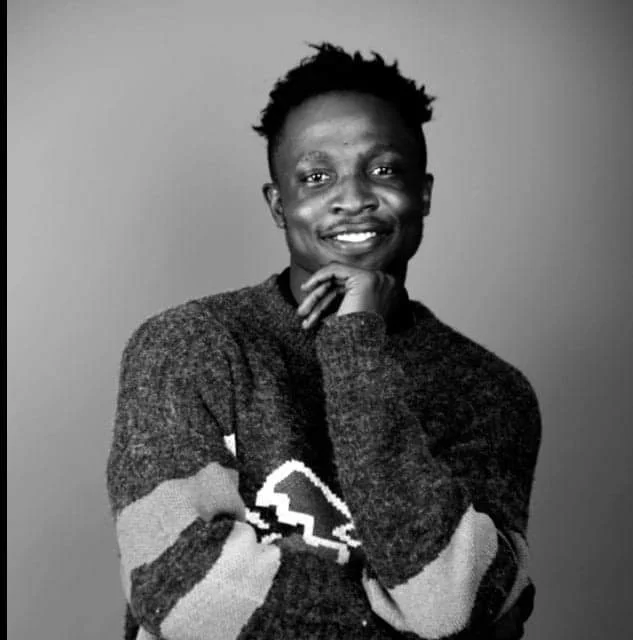
Njoku Nonso is a Nigerian Igbo-born poet whose work often explores the self as a unit of language, as well as themes of grief, familyhood, dreamscapes, and otherness. His poems have appeared or are forthcoming in Poet Lore, Boston Review, Arkansas International, Chestnut Review, Momento: An Anthology of Contemporary Nigerian Poetry, and elsewhere. You can find him on Twitter at @NN_Emmanuels.