
Lucy Lee Jones
interview by Mariya Kurbatova
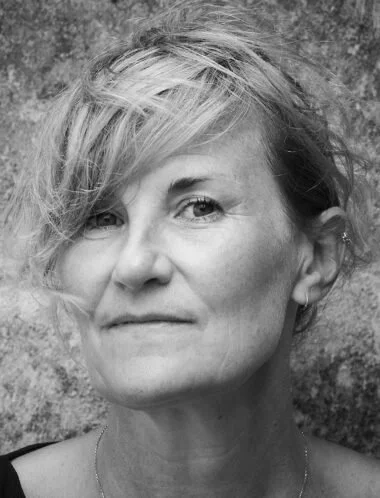
photo by Oliver Toth.
On July 21, I had the great pleasure of speaking with translator Lucy Lee Jones.
Jones’s translation of SMALLTOWNNOVELLA by German author Ronald M. Schernikau blew me away. Ugly Duckling Presse published the translation in 2025; the original novella was published in 1980. It’s written in all-lowercase, a stream-of-consciousness narrative by b, a teenage, queer, working-class communist in small-town Germany. b has an affair with the popular jock leif. When the affair is discovered, scandal breaks into their small and suffocating world.
SMALLTOWNNOVELLA is a slim book, but dense with ideas, delivered through b’s incisive, intelligent, gently ironic voice. His political and social commentary is incredibly clear-eyed, and, though the book is now 46 years old, B’s struggles and observations are still sharply familiar to the modern reader. The novella is a key—and previously untranslated—part of the global queer cannon, and I encourage everyone to read Jones’s careful rendering of it in English.
In the interview edited below, Lucy Lee Jones and I talked all things literature, translation, publishing, politics, and more.
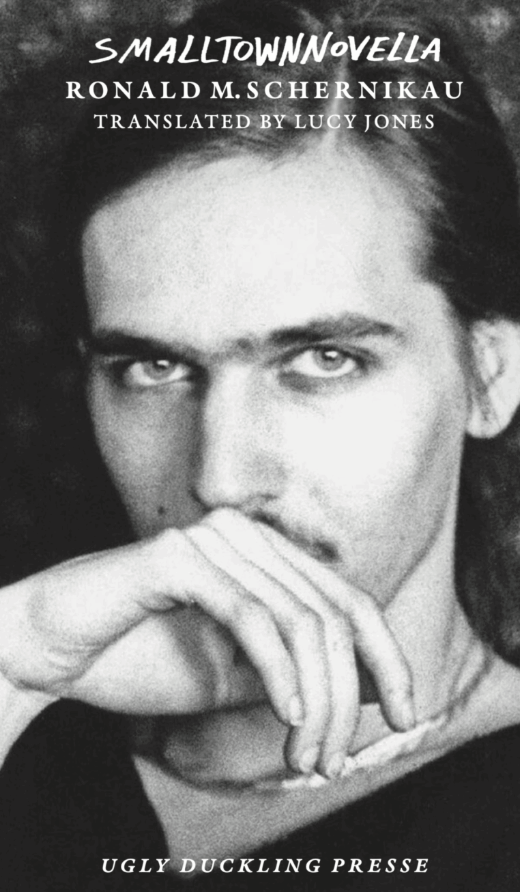
MARIYA KURBATOVA: So, yeah, like I said, I got a marketing email from [Ugly Duckling Presse] and I was really intrigued by the cover. I hate to say it, but I really do judge a book by its cover.
LUCY LEE JONES: I mean. He’s a very good-looking guy.
MK: For sure. I was reading it out in public, and I always got questions about the book based off the cover, and so I was wondering if you could tell me a little bit about this photograph. What is the story behind this cover?
LLJ: So, this is a photograph that, I think, Milo* actually found. It could have been Milo, it could have been C. Bain, who was the commissioning editor, which is how the whole thing came about in the first place. And they were both pretty convinced that they wanted to feature Schernikau on the cover.
Because of his ambiguous pose, it’s an inviting way to approach the book, because so much of what the story is about does involve b’s exploration of his self-image and how he fits into the particular group of people that he’s around, looking like he does. And you can probably see on the cover that he’s wearing makeup, and is doing an unusual pose for a man of twenty-one, in this case, I think he was when the photo was taken.
I don’t know the origins of who took the photograph, but I do know that the expression, if you like, in his eyes was something that both Milo and C. Bain wanted. And I’m all for minimalist covers with very little going on, and I was quite surprised when I first saw it, and quite unsure as to whether it would work – but it has worked, and now I’m really happy about it.
*Milo Wippermann, editor at Ugly Duckling Presse
MK: So just to clarify, it’s the author himself?
LLJ: It’s the author himself.
MK: That’s awesome, because the book feels a little bit autofictional. I read the afterword, and it seems like his life was very similar to b’s.
LLJ: Yeah, it starts off with him looking at himself in the mirror, exploring his feelings towards his own appearance, then exploring society’s reactions to the way he looks, and so it does seem appropriate. And also, whose gaze is the book? Is it a sort of queer gaze on society? You could argue it is a very unusual, uncompromising queer gaze that’s surveying the landscape in which the book’s situated. It fits the story very well.
MK: Yeah, that actually leads very nicely into the next question that I had.
So obviously, this book, it’s very political in nature. When I read the afterword by Ben Miller, he talks about how there’s a big focus in gay literature on, like, penthouses, discos, boarding schools... but this protagonist is somebody who is not only working-class, but also very much a communist, and that worldview really comes through in the book. So I was interested to see how a book’s political content ties into your translation.
Do you tend to choose books that either align with your own political beliefs, or choose books that you feel have an important perspective? How do those things intersect for you?
LLJ: There’s a growing tendency among the translation community to find your voice in a larger sense of the word, which means to find your voice by promoting and supporting literature that you believe has been neglected, that you believe needs to find a voice out there. And this book is very, very close to my heart.
The first samples that I translated were back in 2018, I believe, or even earlier. So, when I did those translations, I was very hopeful that a publisher would be found, but it didn’t work out. I’ve lost count of how many publishers I contacted, but then through a consolidation of factors—the world changing, the queer backlash in the world that’s continuing— I was contacted by a couple of publishers who were interested. And that hasn’t happened so often: that I’ve done something and put it to one side, had to shelve it, but then something in the world has changed, the political situation . . . and then it became something that people were interested in.
So a couple of publishers were interested, but the defining moment was when C. Bain contacted me (an American performance artist on a Fulbright Scholarship in Leipzig) and asked if I had the full translation. You see, in the German readership, especially in Leipzig, Schernikau has a very loyal following. Schernikau has never, for them, gone out of fashion. They may be intellectuals or former East Germans or people who define themselves as queer, or communists, or all of the above. It’s quite an eclectic bunch, but I think he inspires a slightly cultish following among people who really like him.
And C, who’s inside the art scene in Leipzig, came across Schernikau. I think there was even, like, a guided tour of Leipzig where, you know, you go to places where Schernikau has been. And C. did the sleuthing, and he found me online, and then said he would take SMALLTOWNNOVELLA to Ugly Duckling Presse, and try to convince them to do the whole book. And I said, well, that would be great, because so far, what I’d heard is that it’s too short, and it’s too experimental. And he said that those are two adjectives that did not apply to anything published by Ugly Duckling Presse.
MK: I’m always interested to hear how translators immerse themselves in the world of the book. So how do you immerse yourself in that world, so that you’re translating in the perspective of an '80s German teenager?
LLJ: Well… I was an '80s teenager. I was in Britain, and also, I was already spending quite a lot of time in Germany at the time, so this world doesn’t feel too foreign to me.
But in terms of reading around, to capture voice, or to capture the atmosphere, I did read quite a few of Schernikau’s essays. There’s a very famous one called “Fickt weiter” (Keep on Fucking) (published in German in the essay collection Königin im Dreck. Texte zur Zeit by Verbrecher Verlag, Berlin) which was written during the AIDS crisis. It’s one of the most surprising essays you can imagine. It is actually being translated, or has been translated into English, I believe. So I immersed myself in his voice in those essays. The more, let’s say, overt essays by Schernikau, are where you can actually hear him speaking, far more directly.
Every time I went into the translation of SMALLTOWNNOVELLA, I found myself being very touched emotionally by it as well. There’s a good — how can I put it? There’s a good balance between a slow burn of rage and a kind of emotional naivety.And I think I tapped into my inner teenager. I think that was really important.
MK: Do you find that you sort of typically have this personal connection that comes through in your translations?
LLJ: Well, not always. It helps, but this was not too difficult for me to tap into for various reasons.
And do you know what’s so refreshing about Schernikau? And this is evident in SMALLTOWNNOVELLA, and in his essays. It’s that he looks calmly into the face of bigotry, prejudice, misogyny, homophobia, and he doesn’t just crumble. That’s what’s so refreshing. This is not a depressing, introverted, melancholic meditation on what it means to grow up queer, or of victimhood. This is the opposite, which is to empower people in that position to embrace their identity, and to actually live it, and to say “This is my identity, and now I want the world to change. Because I’m in it, as I am, unapologetically.” And I think that’s what makes it so powerful.
And it’s very interesting to be translating something like this at a time where there’s an increase in homophobic attacks in Berlin, even. So, yeah, it’s an interesting time to have a thing like this come out.
MK: Reading it, I had to keep reminding myself when it came out, and just realizing that this is a pretty old book at this point.
LLJ: Did you feel, though, it was old?
MK: No, it felt so fresh. I think the boldness that you described was very refreshing to see. It felt so present.
I’m wondering if you can talk to me about the research process for a book like this.
LLJ: I try to enter the world of the writer. I try to sort of immerse myself in the world of the writer. And luckily, my everyday life is not so far removed, in the sense that I live in East Berlin, even it is now very gentrified. My experience of living here for 26 years has been that I have seen and heard and been part of the kinds of conversations that I feel surround this book. It’s a negotiation and an attempt to reckon with the past, which goes beyond much of anything that I’ve ever experienced in, say, Britain, because it’s a continual process, it never really stops, it never stands still. And this is a productive vein and a very rich vein to tap into when you’re translating a book like this.
I didn’t do research in the classical sense, like going into archives, as I have done with other books. I didn’t go to the Schernikau Archive, but it does exist here, at the Akademie der Künste.
I know this sounds kind of crazy, but I did go and visit Schernikau’s grave here in Berlin and tried to comprehend the loss of somebody like this, and imagine what he might have written, how he might have developed as a writer, how he might have gone on. I talked to the publisher, Dorothee Gremliza, at Konkret LiteraturVerlag, and she told me a little bit about her experience with publishing the book.
So, I didn’t necessarily do academic research, it was more a kind of living in the world of.
I also talked to the French translator Jeffrey Trehudic, somebody who also had a very visceral, personal reaction to this book, and also some similarities to Schernikau’s biography. So that was really a productive vein.
We swapped ideas on why this book touched us, why we felt it was important, and I think it comes back to the idea that the main character is as far from being a victim as you can imagine. For the blurb, the writer Eliot Duncan said SMALLTOWNNOVELLA was the book, the friend he wished he’d had at high school. Like, it would change your high school experience to have had one person who was unapologetically unafraid to be themselves.
MK: It is such a singular book, it feels like, and I’m really intrigued by your passion for this, and I’m wondering, when it comes to choosing translation projects, how do you go about choosing? Do you have a say, or is it more driven by economic considerations? What is your process for selecting which works you’ll actually be translating?
LLJ: I don’t have a great deal of say in my projects. I’ve been very lucky in the last couple of years that I’ve just got ‘such a long breath.’ It’s a saying in German, ‘einen langen Atmen haben,’ and it means to have staying power. I am so patient that eventually something that I love will come back in fashion. And this is one of them.
But I do have to say that most translators, myself included, don’t find it easy to make a living from what we do, and it’s not easy to make a living from it exclusively, but I’ve never translated anything that I didn’t 100% believe in. So, ethics do come into it. It’s magical when the whole process kind of connects up: You love the book, somebody else loves the book, it gets published, and then it chimes with the zeitgeist. The descriptions of homophobia that take place in SMALLTOWNNOVELLA could apply 100% to what’s now happening to trans people. I mean, the queer people being most visibly victimized these days, for political reasons.
MK: Everybody that I hear talk about literary translation, it feels like it’s such a battle between what you’re passionate about and what the market wants.
LLJ: The market, what is the market? This is the big conundrum. The market … the market doesn’t know what it wants. That’s the first thing. It is a risk-averse place because a book has to be profitable, but when one person takes that risk, and it works out, everybody wants a piece of that.
That’s the conundrum of marketing. The market is created by decisions made by publishers. The fewer risks taken in those decisions, the more homogenous the whole market becomes, until what we’re doing is just reproducing what’s already out there.
I am so grateful that Ugly Duckling Presse took this risk. Because it was. It was a risk. It might have been a small risk, but it was still a risk.
MK: A big conversation I’ve been having with myself is thinking about indie publishers versus the Big Five. It feels like there’s a trade-off of ease with a large-scale publisher, where they have much capital, like all the work is kind of done for you, versus something like a small indie publisher, where it’s just a couple of people who have the passion for a particular project.
LLJ: I mean, in translation, you have the additional cost burden of the translator’s fee, so there’s a reproduction, if you like, of all of the things that are difficult in publishing anyway, plus you’ve got this extra hurdle, which is, like, how to pay the publisher, how to pay the translator. And, you know, if grants for small presses and translators are further eroded, we’ll have to see what happens to diversity in publishing, because, for example, the government here is clawing back its public funding for translators. You know, we’re having an election in September, in Berlin, and I think things are going to get rough for the arts scene.
MK: With that, how did you end up breaking into this field? How did that trajectory kind of start for you?
LLJ: Well, I was working as a fashion photographer, and I making very little money with it, but I was paying my rent through teaching English, and, at some point, when I had my daughter, I realized that I had to make a better living. And so I started translating monographs of photographers, so art books on photography and culture, in the broader sense. And I felt like I had an expertise in that field, from working in that field, and a passion. I didn’t come to translation as an academic, I was a self-taught photographer. And I entered translation as a self-taught translator. I had studied German, but I kind of ran away from anything to do with the written page for a while because I felt like I needed to live. To get some life experience. I think translators need to have some sort of life experience. It’s really hard to translate novels where human emotion and conflicts are being portrayed and you really haven’t had much life experience. So, I think that’s how it started, and then I gradually became fascinated by the idea of literary translation and found a bit of a niche.
It was a very ‘time and a place’ moment: Seagull Books, where my first translation was published, were open to pitches back then, and that’s something that’s changed. I mean, lots of publishers are technically open to pitches, but they get pitched to far more than they used to. And even when I started, there were a few already well-established translators that I knew but I could name them all on one hand. Two hands. And now, it’s become an incredibly competitive field. Which kind of wows me each time because it’s so hard to earn living from it.
So yeah, I went full circle from studying German, then away from written-based work, going out, doing shoots and organizing production teams, and then I came back to this quiet, meditative, focused work after ten years of being away from it. I found a book I really loved, which was Annemarie Schwarzenbach’s Lyric Novella, also a queer book, about queer female desire, and then I really just figured it out from there, you know? And there have been times when it’s worked better, and times when it’s been really difficult, so you have no guarantee that it’s going to work out. You just have to, you know, hope.
MK: Well, it’s always happy to hear success stories.
LLJ: I have to internalize the idea that I am a success story. I really don’t go around thinking that at all. And when I’m teaching, for example—I teach literary translation online, with Oxford Translates and a course here at the Humboldt University funded by the DÜF—I come up face-to-face and in conversation with younger people who want to translate, and they kind of look up to me, and that’s strange because I never felt as if I’ve arrived, you know? It’s a character thing, I guess.
Going back to what you said right at the beginning, about voice and advocating for books that you believe in or that feel are really important, I think this comes when you have had a couple of proven successes. I don’t think it was a coincidence that I was able to advocate for this book at this stage of my life—I’m not going to say career, because I think career is just such a cringey word—but at the stage of my life I was at, I thought, yeah, I know that I can advocate for this book, and that people will see that I have a good enough track record to trust me. So, yeah, I think that’s a privilege that I earned.
MK: And so, with that, what’s next, after something like this?
LLJ: I’ve been working with my nose to the grindstone for, I think, two years. I think I took my first break in two years at the beginning of June for ten days, and… no, two and a half years. And I didn’t want to let up on the momentum, because I really didn’t know when the next book is coming. Now I’ve got one book that’s going to be finished at the end of August.
But then I’ve got four books coming out in succession, like, September, October, February, and then next October. But then, there’s nothing out there on the horizon, and I have to go back into looking at catalogues of books and figuring out what would be the next thing. I’ve been completely busy. But I really want to get back into seeing what’s out there; that’s part of the thing that I love doing. So that’s the near future.
Because, of course, once the book’s out, I think it’s lovely that people actually want to talk to you about it, like you have. That part of it is super important as well.
MK: That’s so exciting, and to have so many books out in succession
LLJ: It’s almost a little bit, sort of “how did that happen?” And then I realized, oh yeah, I didn’t see any of my friends for about two years.
MK: So, if your loyal fans want to keep up with you and your work, what’s the best way to do that? I know you have Instagram, Substack.
LLJ: Yeah, you can get in touch with me on Substack, you can get in touch with me on Instagram, those are both very viable and valid ways. And I use Substack to post surplus material; extra materials created during the translation. You are, as a translator, effectively writing or rewriting a book. So, I have these loops of inspiration that come out of that process, and they have to go somewhere, and I tend to post them on Substack as a kind of online diary. I enjoy the process of being in dialogue with people and being in dialogue about what it is that I’m doing, translating, and so on.
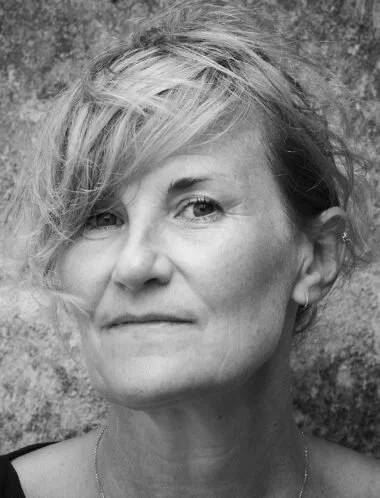
Lucy Lee Jones is a British writer and literary translator who lives in Berlin. She has translated the work of Brigitte Reimann, Anna Seghers, Charlotte Gneuß, Verena Keßler and Ronald M. Schernikau, among others, and was runner-up in the 2023 Schlegel-Tieck Prize for her translation of Reimann’s Die Geschwister (Siblings). Her own short creative non-fiction has appeared in SAND, Pigeon Pages NYC, 3:AM Magazine and others.