
I Was Alive Here Once: Ghost Stories
Two Lines Press
Various Writers, Various Translators
Reviewed by Mariya Kurbatova
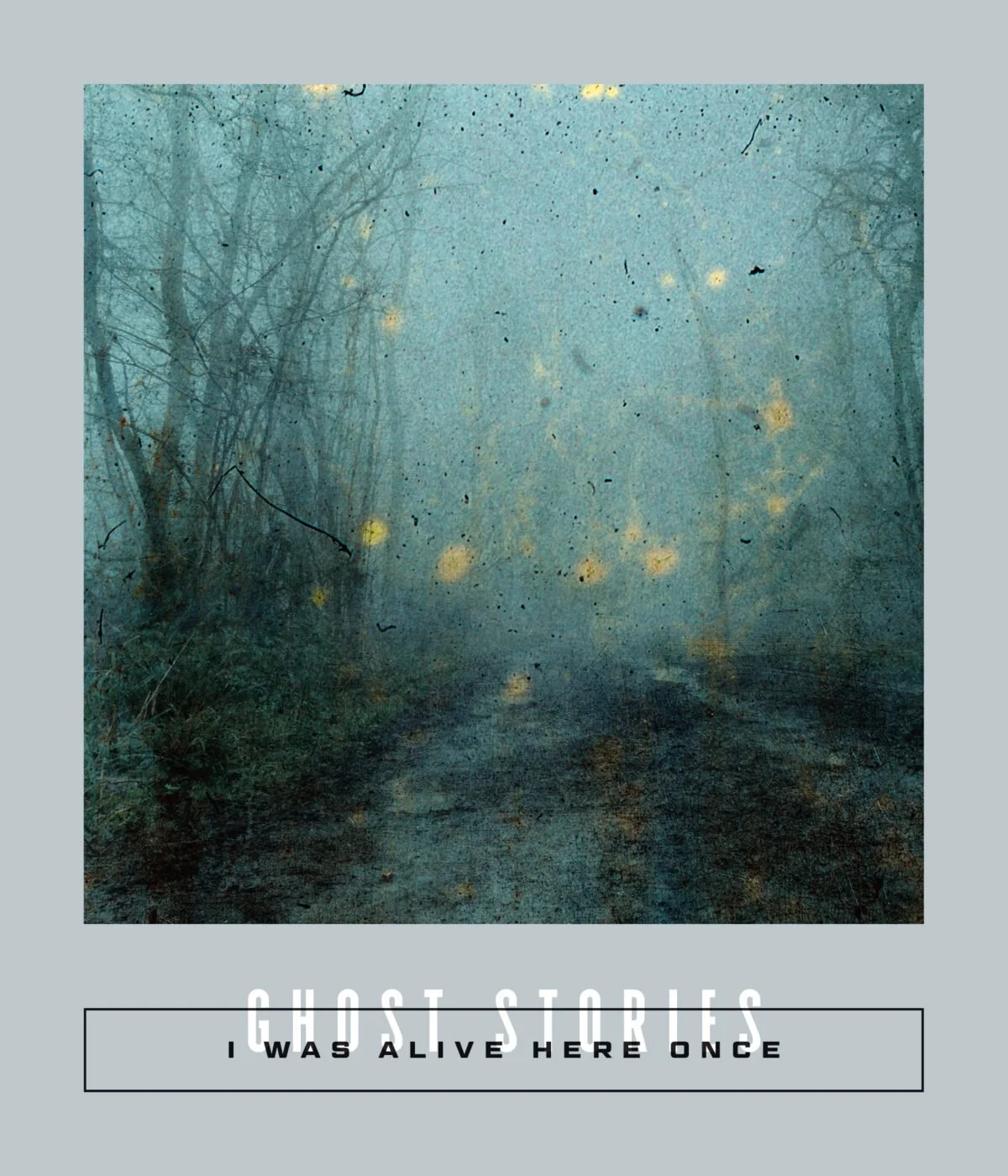
A dead girl in a creek who can't remember her name. A midwife birthing a jinn baby. A lonely man stalked by a shadowy shape. These hauntings bloom and groan in Two Lines Press's 2026 anthology I Was Alive Here Once: Ghost Stories. This collection brings into conversation eight writers and eight translators working across eight different languages. Some stories offer eco-criticism. Others, the sort of horror only fairy tales can conjure. All remind us: ghosts still seep through trees, pavement cracks, and sun-bleached missing child posters, no matter when or where one lives.
The collection opens with "A Swamp's Love" by Cho Yeeun, translated from Korean by Giulia Ratti. Our first ghost, Water, has been dead as long as she can remember. Death's all she knows — the girl can't recall her own name. She floats inside a creek, locked in her liquid grave, stepping aground only after heavy rain. Her tedious days are spent "counting the fallen leaves or greeting ugly fish"; her only pleasure comes from scaring kids and fishermen who dare venture near her banks. And then, she makes a friend, a girl as strange and haunted as herself, who visits Water in her creek. The real threat, we learn by the end, isn't dead girls. Something much more powerful threatens to tear up their slice of forest.
And so, the stage is set for stories that scare and shatter hearts and, occasionally, offer thimblefuls of hope. In “Jupiter," written by Tomoyuki Hoshino and translated from Japanese by Brian Bergstrom, Akane discovers that her memories of the past and vision of the present have been twisted by trauma. In Salomot Vafo's "The Loose-Haired Women," Zarina is desperate to return home to her infant child, sneaking across gun-patrolled borders; Zarina’s ensuing encounters with both human and supernatural horrors are wrenching in Sabrina Jaszi’s translation from the Uzbek. "The Death of Aunt Huang,” written by Jurapat Petcharawet and translated from Thai by Peera Songkünnatham, opens with the titular Aunt Huang capitulating to her husband, allowing a tree to be filled on their property and thereby setting loose a vengeful spirit. We learn: some ghosts aim to maim, others are advisors for the living, and others still are our sad and untouchable neighbors on this lonely planet.
The collection celebrates both its authors and its translators, offering all sixteen contributors' bios at the book's end. These translators' efforts bring forth stories from all corners of the world, from Poland to Tanzania, from Yemen to Iceland. They eschew tired ghost tropes, rendering fresh prose that sings, so alive.
Death is political. It follows then that ghosts and the stories told about them are political too. Who gets to live within our world, and where? Who ends up dead and forgotten? Who makes that choice? I Was Alive Here Once doesn't shy away from such questions. It embraces a kaleidoscope of ghosts with all their varied histories and futures, bringing old myths into our uncertain, global present.