
interview by Holden Schmale
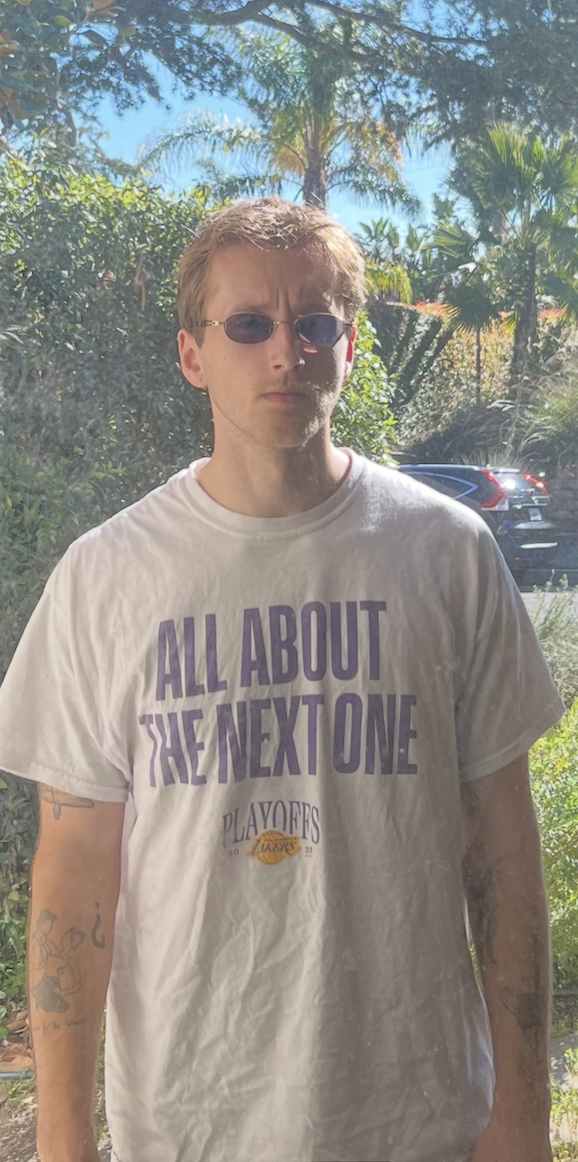
In April, we launched the 18th issue of The Arkansas International. The pieces included were selected before I become fiction editor, and I had not read anything of Ben’s at the time. The issues’ theme was “Arkansas,” and nearly every writer in it had a direct connection to the state. One of the few exceptions was Ben Bird, winner of the Henry Dumas prize in fiction, for his piece “Fishface Sails North.” At the launch event in Fayetteville, when Ben strode up on stage, unmistakably Californian in looks and demeanor, I wondered how the crowd would react to his piece, this being an event so deeply devoted to celebrating the magazine’s landlocked home. He got a laugh in the first thirty seconds. The crowd was captivated by his prose, taken in by D, the narrator, and his buddy Fishface. I was struck by the subtle humor he wove into the voice of D, and maybe even more so, I was struck by the care he took in dealing with existentialism and emotional weight. Fishface was a hit at the reading. The first thing I did when I got home was crack the spine of the newly released magazine and read it in its entirety.
Flash forward to this fall. At a staff meeting, we discussed former contributors who might be fruitful to interview. My mind flashed back to April, to Fishface. A few weeks later, Ben and I hopped on a Zoom call. We talked about everything from writers we like to the heat death of the universe. I left our conversation feeling a bit more hopeful about the world, about writing, and about reading. If time permitted, I would’ve talked to Ben all night. His work reminds me of so many anthologized writers of our time, from Saunders to Johnson to Lerner, and he is on his way to doing big things in the writing world as well. I hope you enjoy reading what he had to say.
This interview was conducted over zoom and has been edited for clarity and readability.
HS: To start off, I just want to ask you about your life as a writer. I know you're working on a novel right now – how's that going?
BB: Yeah, I've been in the deep throes for a while, I'd say. Well, I'm in an MFA program right now at San Diego State. I'm in my third year of that. I'm technically kind of like a super senior because I was at a different MFA program that I dropped out of. You’re in an MFA program, so you might relate to this. It puts a magnifying glass on the writing thing where you're like, okay, this is my life. Everything has to be in service of the writing. That's been the case for the last few years. I wrote a book, that I wrote probably way too quickly. I was just too excited. I did the first draft in three months. Then did subsequent drafts in probably two months and I was like, okay, I did it, you know, I sent it to some people. They cried reading it. I was like, I did it. I'm a writer. I wrote a book. It's awesome. And then I tried sending it out and had a couple quote unquote near misses, but really, you're so far away when you think you're not. I had my heart broken by that. The competitor in me was like, oh, I'm going to do better. I'm going to write a better book and then I'll get it out there. And then I wrote a second book and pretty much the same thing happened. I got too excited, didn't wait long enough. Now I'm taking my sweet time. I've learned from the first two. So, I'm writing a third book and hopefully I'll be patient, you know?
UPDATE: Since this interview was conducted, Ben signed a deal for a novel of his to be published in 2027.
HS: Yeah, absolutely. That's awesome. I remember my thesis advisor from undergrad, however many years ago telling me “Yeah, you got a lot to look forward to. I have two books and nine unpublished books. So, have fun at your MFA.” It’s a grind. So, how are you thinking about short fiction versus long form fiction these days? Are you still writing short fiction? Are you thinking about sending stuff out? Or is it all the novel?
BB: Yeah, I think I needed to write a certain amount of short stories before I felt confident even trying to approach a novel, because, I mean, you could break it down in any kind of annoying way, but essentially, I feel like a novel is just a bunch of short stories glued together cohesively. So, if you can't write just one compelling twenty-page story, what are you doing? A novel is like trying to write a three-hundred-page compelling story. It took me a long time to feel like I was able to kind of get the response I wanted, not just from other people, but from myself. Reading something and feeling like it was complete, which I still can struggle with, at times. But I love writing short stories. I love reading short stories. I feel like that's where the most magical experiences writing I've had have been, through writing short stories. I guess my problem is that they keep getting progressively weirder and more postmodern and abstract, and that becomes harder and harder to find a place to put it into the world. But in terms of the actual artistic experience of writing them, yeah, I still love to write them. I just finished writing a story about a guy who needs to go get a colonoscopy, and he ends up shitting out his father. It’s a little out there. I probably won't send that one out, but it was fun writing it.
HS: When you're writing, or when you're coming up with a story, whether it be a story long form, where are you starting? Are you starting from a feeling, a situation, a character? What’s the crux of it for you?
BB: That's a great question that I wish I had a concrete answer to. It feels like the cliche is it's almost a divine interpretation. But, if I'm thinking about the Fishface story, the whole thing started with a bench. My wife used to live in Venice. She's doing a program in LA, so we were doing the long-distance thing. She was at a meeting, and I was just walking around the Venice boardwalk, and it just felt so charged with energy, and I was looking at all these people and I was like, oh, yeah, there's a story here. So, in that specific case, it started with just physically being out in the world and, and seeing what moved me. I was looking at this bench, and I started imagining a character – at this point of the process, it's kind of amorphous and has no wants or qualities to them. And they're getting voicemails from someone that's threatening to kill them and that kind of thing. I have no idea. You know, that's probably just me having watched a movie when I was a kid, and then it just sticks in your subconscious, and it comes out whenever it pleases. Usually what I have to do is take my original idea, which is the most harebrained and ridiculous, then I have to whittle it down slowly into something that's compelling enough for me to follow, so that it doesn't feel impossible to make compelling for another person. So, the original idea for the Fishface story was these two guys stealing wolf puppies from someone. Their whole plan is to go out into the woods and try to get themselves raised by wolves. I ended up writing that story later, but I had to start with the more and then slowly all the details just kind of fall in once you write the first line and see what happens next.
HS: That's a great answer. Now, before we get into Fishface, I’m interested in what made you fall in love with this? What do you go back to and revisit, whether that be stories or novels?
BB: The short answer is, I'm very lucky to feel like it's too many things. I have a friend I met in undergrad who was just auditing a fiction workshop because he knew the professor. The professor was his neighbor. He grew up with her kids. So, he was just there and he developed immaculate taste, and he just kind of introduced me to everyone. Some of those people being maybe a bit cliché as these kinds of post-modern white guy writers, but Denis Johnson is the top of the mountain for me.
HS: Yeah, I've got Train Dreams sitting three feet away from me right now.
BB: Yeah! Funny enough, the first time I read Jesus's Son, I was blown away, but it was more an appreciation of the technical aspect. I wasn't as moved as when I read The Largesse of the Sea Maiden, his posthumous collection. Then, on subsequent readings of Jesus's Son, you know, because you develop a kind of parasocial relationship with these writers, you see so much of their humanity in these stories. I'm a sucker for Miranda July's work. Aimee Bender was one of the formative surrealist writers that I really attached to. There's so, so many. I'm kind of regrettably a big fan of Ben Lerner because every time I read one of his stories, I try to write with a lot of commas, and I can't pull it off. He’s another guy who I read his stuff, and it just feels so like human and kind of ironically accessible given like his use of language, but it feels very vulnerable. That’s kind of what I'm into, is when something feels batshit crazy, but you can still feel the human heart in there.
HS: I read Transcription this summer and was really struck by this character that's almost like a nebulous genius. I couldn’t quite put a finger on what exactly the mentor figure even does, but it's so human, and so heartbreaking. It’s a great book. I think I read it on a train. It's the perfect book for that. Train Dreams feels like that too, where you get lost for ninety minutes, two hours.
I want to talk about “Fishface Sails North,” which I love. You already answered my first question about how this idea came to you, and the process of writing it. I want to jump forward a little bit. When you're stitching these elements together, did you have a specific effect you're looking to capture? When someone is going to sit down and read this story, do you have an emotion you want them to leave having felt?
BB: I think for me personally, I can't think that way. If I ever try to think that way, I get stuck. I'm a big believer in the George Saunders school of thought, which is just, let one line inform the next and see what happens. But I think as a person, I'm deeply interested in human connection in the face of like oblivion, you know. It bleeds into everything I write because it's what I think about really often. I'm interested in relationships, but not traditional boy meets girl kinds of things, more like, what connects us to one another and why? Why are we compelled to do anything in the face of certain death?
HS: Who needs sex when you got love? Yeah, that's definitely a theme that I see in “Fishface Sails North” and in “Loafers.” They're both stories that are concerned with death, but they're so damn funny too. It evokes Saunders, I think. A lot of the writers you brought up too are laughing in the face of death. I saw a Jason Segel quote, the actor, about how we experience the world dark/funny, not dark/dark. I wonder if that's something you think about when you're writing?
BB: I mean, I don't try to be funny. This might sound pretentious, because I know it's hard to be funny in fiction, but I feel like I can't help it. If I sat down and tried to write a serious story, I wouldn't be able to do it. No matter what happens, I just got like my dad’s perverted sense of humor. I just feel like, yeah, it is like cosmically absurd that we're all here, that we're having this conversation through a telepathic screen. This sounds like a guy’s first mushroom trip, but it's so ridiculous, how could you not laugh at it? At the same time, it's also so beautiful and tragic, you know, and a good story has to break your heart and make you laugh. That's the ultimate goal. I have this buddy I met in undergrad, and I'm usually just trying to break his heart and make him laugh. If I can do that, I feel like I've written a good story.
HS: I love that. When you're thinking about readers, is that something that's helping you? Boiling all readership down to one person?
BB: For sure. I think it can get easy to get caught up in trying to please everyone in fiction. I go through it all the time when I'm writing and I think of something that's maybe particularly bizarre or ridiculous and I'm just like, oh, I know certain people aren't going to like this. But that's the case with anything, right? That's not to say you should be writing to please this one person either. It's more just like, essentially, it should be yourself. That's the ideal is like, can I write something that makes me laugh and cry? But I do I think having a person that, when I finish this, I can send it to them and they'll tell me what they think, and it'll be real. That's super important.
HS: A thing I love about this piece is that it's a super simple situation, right? When you really boil it down, it's these two guys on mushrooms. We're going to steal this money. We're going to buy this boat and we're going to go. It's really driven by these two characters, this platonic kind of love and admiration, all happening in this weird space. I'm wondering, how much are you thinking about situation and character and how those interact, because it's so hard to piece together a full story that just works. I read a lot of stories where I love the character: the situation I'm not into. Inversely, I read a lot of stories where I think the situation is great, but I’m not really into the character. This is one where you get them to work perfectly together. Do you look at that as a technical thing? Or do they just elevate each other?
BB: This is where I really feel like revision is God. Because if you can just find something interesting, whether that's a character or a situation or the voice, you know, whatever it is in the first draft, you can slowly build it towards that ultimate goal of it all being married, like you said. I can totally relate to having read things and being like, wow, I love the way this is written. I love the things they're saying, but I don't give a shit about what they're doing at all. It just doesn't matter to me. And that's not to say it won't matter to someone else. I guess that's where finding your reader comes in is. Are you willing to go along with, in this case, a pretty ridiculous storyline? Do you love me enough to keep along with something like this? I think of it as starting out with trouble and seeing where it goes. The cliche is once you know your characters, once you kind of figure out what they want and what they don't want, then you just listen to them on the page. Which sounds almost psychotic, but it's true when you boil it down. What would this guy say in this scenario? What is he thinking about? What is he feeling? And then, you know, you investigate that enough and sometimes you find something worth saying.
HS: One of the things that really grabs me about this piece is the characters that aren't on the page, the effect that they're having. When we really get into the meat of it, it's D and it's Fishface, and that's who we're hanging with. But D’s mother and Uncle Charlie’s effect is present throughout. Are you thinking about them the same way you're thinking about the characters that are on the page? Are you thinking about how to characterize them? Or are you thinking about them as extensions of the characters that you're actually working with in scene?
BB: I love when stories give you these little tidbits of the world to let you know that there's a rich world behind this story. I've made this mistake before, but I hate when you are reading a story and it's just pages and pages of exposition about a character you don't really care too much about, even if it's exquisitely written. So, I try to be conscious of that. For the first draft, it's all discovery. What brought these characters here? Why are they here? Who's in their life? Just throwing shit at the wall and seeing what sticks, and then revision is where I try to make those all mesh.
HS: Before we go, I wanted to ask you, generally, are you feeling optimistic as someone who is looking to sell books and publish stories? Are you optimistic about novels over stories, about people reading in general?
BB: I think I'm like a walking contradiction. And the fact that I'm pretty, for better or worse, nihilistic. My default setting is to be doom and gloom, but I'm also a very hopeful person. Whatever ancient DNA I have rebels against that and is like, we got this. In the fiction world, I feel that push and pull of despair and hope. I'm teaching an introduction to creative writing class and there's a very real distinction in the class between people I can tell are supremely moved by the stuff we're reading, and those who don't have the attention for it. So, I'm getting real-time feedback. And I'm also not letting anyone use technology, which is a challenge for some students because they're so used to being inundated by it. All of this to say, yeah, I'm hopeful. I do really strongly believe if you put in good work and you have good attention and good intentions, like good things will come from it. They've already come for me, and I'm grateful for that. But do I think that things are trending in a good way? Probably not. Probably things are trending in a bad way. Still, I have a friend who always says “we're all going to the mountaintop and we're all going to get there, and we're all going to get there in different ways. And, when we get there, we'll be there.” So with fiction, whatever that mountaintop is, you won't know. You can't know what it looks like. You're not there. And when you're there, you might not even recognize it, but you'll get there and then it'll be done.
HS: I love that. I feel the same way where I'm pretty nihilistic, but at the same time, this stuff has survived this long, you know? I think it would be a sad world if we didn’t tell stories, you know? It's not a world that people really want to live in, even if they don't know it yet.
BB: There's a Ben Lerner interview where he's talking about the impact of his work or whatever, and this is obviously someone who's very successful. He was talking to the interviewer and saying, “Yeah, I don't really think anything that I'm doing means anything, but if I tried to live in a world without art, I think I'd just kill myself right away.” Maybe there's nothing interesting about being alive if there's no art. Then you kind of answer the question, you know? Yeah, it does mean something. Is it going to grant you immortality or solve global warming or push off the heat death of the universe? Probably not. But is it going to make a meaningful impact on someone's life? Yeah, probably. I think so. It’s definitely made a meaningful impact on mine. I've met so many great people, and yeah, it's such a gift. If only we could get out of our own heads and acknowledge that more of the time.

Ben Bird is a fiction writer from California, where he currently studies and teaches writing at SDSU. He is the recipient of the Arkansas International's 2024 Henry Dumas Award, judged by Bud Smith, the 2025-2026 SDSU Outstanding Critical and Creative Work Award for Fiction, and has received support from the Kenyon Review's Writing Workshops. He is currently working on the late stages of a novel and trying not to die.