
Ben Bird
Fishface Sails North
It wasn’t easy stealing from Uncle Charlie. For one thing, I love the guy. He’s been real good to me, especially since Mom died. Always concerned with my well-being and all that. Even putting it over his own. That’s why he gave me the job at his restaurant. Since he hated to see me wasting away. Plus I’m pretty sure he’s in business with the Mafia. Something about the way he carries himself. The little table in the back where men with big bones and slick hair play cards Saturday nights. That was the business his grandfather was in, his namesake, back in Montreal. Mom used to tell me stories about her grandpa Charlie when I was growing up. Doing deals with Al Capone and the like. I could tell she was proud of it somehow. Like it excised her from the dull hum of her life.
Fishface and I were under the effects of magic mushrooms when the plan came to him. It was simple, he said, rolling in the sand, wearing kelp like a headdress from Ancient Egypt. He was going to sell all of his earthly belongings, buy a boat, and sail north. Fishface said he had a great feeling about the North, as a direction mostly, but also the way the word rolled off of his tongue. At first, I was met with one of those spirals of emotion, the type where the sadness drills deeper into you the longer you sit with it. I couldn’t imagine a Venice without Fishface. And then he asked me to join him. It didn’t take me long to agree, though I had my doubts. Did Fishface even know how to sail? How much would a boat even cost? Fishface said he saw a flier for one on the boardwalk. It was only seven thousand dollars. He thought we could scrape the cash together, and I believed him. But it turned out we weren’t as rich as we felt. After he had sold everything, after I emptied my bank account, we were still short a few grand. I got him a job at Uncle Charlie’s restaurant, and it barely made a dent, even after a month. We picked up extra shifts. Nothing. I had to swallow my pride and float the idea of a loan by Uncle Charlie, but he just called us a couple of morons, telling me to drop it, that we’d get ourselves killed. Usually, I’d be inclined to listen to him. He was the only family I had left. But it didn’t feel like I had any other choice. Do you know that feeling? Where your life might look just fine from an outsider’s point of view, but on the inside it’s all quicksand and heartache. It’s a feeling only something drastic could cure. And the thought of this voyage, to who knows where, it was the only hope I’d felt in a long time.
Fishface didn’t always have his name. He was Marvin when we first met, back in grade school. And he didn’t earn it with his looks. He’s actually a handsome guy. The type you wouldn’t blink twice at if you saw his face on a billboard or magazine cover. Doesn’t resemble a sea creature in the slightest. The name got passed around after his older brother walked in on Fishface having his way with one of those Big Mouth Billy Bass things when they were kids. You know, the green, plastic, singing fish. Then it just stuck with him like that. After his older brother OD’d, Fishface made it his legal name. It was his way of honoring him, I guess. Sometimes I’ll imagine what it would be like if Fishface and I got married. We’d buy a nice house on a golf course, watching the little white ball continue to fall short of the hole. Who needs sex when you’ve got love? It’s just a shame neither of us knows the first thing about golfing.
Things were moving like molasses and Fishface was starting to get nervous that the boat would sell. I’d tell him things like, “There’ll be other boats.” And he’d just respond saying, “That’s the boat, D. That’s the boat.” So there we were, just last night, at Uncle Charlie’s restaurant. About two in the morning. I thought about saying things like, I’m not sure this is a good idea. Or, maybe we should figure something else out. But I knew there weren’t any other options. We’d already solved the puzzle. There was a safe in the back where Uncle Charlie kept a load of cash to front their weekly poker games. I’d become their “beer boy” over the last few months, so I knew the drill. Taking the money was almost too easy. At first I got so giddy I thought I might shoot out through the roof and start watching it all from above. But I remembered what we were doing. Who we were doing it to. Guilt dropped down my throat and into my guts like an anvil. The code was 09-02-1958. Mom’s birthday. God did he love her. Who wouldn’t? She was a rainbow, unless she was drunk. Which wasn’t too often, until Dad made his exit. I guess you could trace it all back to that.
Now Fishface and I are sitting together on our favorite bench on the Boardwalk. He’s got the money in a large, red Igloo cooler resting on his lap, the other contents unknown to me, full of what Fishface deemed “essential” for our trip. Behind us, the ocean crashes into itself and laps up the shore. I’ve already gotten six voicemails from Uncle Charlie, each detailing a unique way in which he’s going to kill me, my favorite being—I’ll string you up by your teeth. I don’t think he really means it, that he wants me dead. It was just yesterday during my afternoon shift that we were laughing about some stupid shit customers were doing like we were at the zoo, pointing out our favorite animals.
My one-true-love Melanie was always calling me a cynic. She’d say I should try maintaining a more positive outlook, as if there was some kind of switch I could flip. Now she’s off traveling the world with nothing but a backpack, trying to make the most of things before she’s dust and bones. I thought I’d die when she told me she was leaving. She had just turned thirty and was worried about the direction her life was headed. I tried to tell her life didn’t work like that. There was no route you could take that would change the outcome of it all. But what did I know? She told me she didn’t want to be with someone who thought like that. I still have those dreams where I find her in some foreign land, usually a desert, sometimes a dark forest, but every time I try to approach her, there’s a primal fear in her eyes, like she doesn’t recognize me at all.
I never thought I’d leave Venice, the place I’ve met everyone I’ve ever loved. It might sound stupid, but I think the thing I’ll miss the most is just sitting out here—watching the tourists teem like ants, their eyes full of wonder, then the way their faces turn when the smell of piss mixed with the salty air wafts up their nose. Then the locals, dressed like delegates from another dimension. But sometimes, you hit a wall, you max out what you can do in a place. It’s when you start jumping from place to place and hitting that same wall that you have a problem. That’s what Dad used to say.
“Check that guy out,” Fishface says, scratching his patchy beard. He’s pointing at a shirtless man carrying two large bags full of sand. The man’s got that disgusting beauty about him, his torso all veins and ripples of hardened flesh, the sun bouncing off his dark skin like the sea at dawn. “Do you think his dick gets hard?”
“You wanna ask him?” I’ve always admired Fishface’s desire to know the world. People have a tendency to write him off, but I think he’s a wicked genius. Just last week, he named thirty cereal brands in under a minute.
“I don’t need to, man. Think about it. Why would he be carrying those bags? All alone, in this heat. Despair, man. He’s full of despair. I doubt he gets hard.”
My phone starts to dance in my pocket. “It’s Uncle Charlie again. Has to be.”
“You gonna answer?”
“I don’t know. I’m kind of enjoying collecting these voicemails. Learning all the different ways I could die.”
“D, just answer it. He’ll understand. And if he doesn’t, fuck him. We don’t need his permission. Not to mention, he’s been paying us pennies, exploiting our labor. He’ll be just fine.”
I grab the phone from my pocket, and sure enough, there’s Uncle Charlie’s fat, angry face on my screen. I accept the call.
“Hey, Unc.”
“Doug, you moron. What on God’s green Earth could you be doing that’s more important than picking up my fucking call.”
“Well, Fishface and I are…”
“Of course that fish fucker is part of this. Listen, bud. Forget what I said earlier. I don’t care what you’re doing with the money. I just need you to bring it back. Right away. Like yesterday. Can you do that for me?”
Fishface is leaning over my shoulder, shaking his head, mouthing DON’T, over and over again like he’s in slow-motion.
“Uh huh.”
“Alright, I’m at the restaurant now. Just bring it back here. No harm done. But listen, kid. If you’re not back here in half an hour, I’m going to come find you. It’s not going to be pretty. You hear me?”
“Yeah, Unc. I hear you.”
Several texts pour in from the man with the boat, saying it’s all ready at the harbor, that he’s got the keys with him, that he’d like to get the deal done before his wife finds out he bought a boat in the first place, and a crying, laughing emoji. Since Fishface pawned his phone, I’ve been in charge of handling the sale. I show the messages to Fishface, and just like that we’re on our feet, him dragging the cooler behind him. We reach our next bench and sit, waiting for the bus. There’s something electric bouncing between us. Like all the atoms in the air decided to speed up. And I can tell the man at the end of the long, green bench is feeling it too. He’s smiling behind his sour, leathered face. There’s graffiti beneath our feet that takes me a minute to make out:
STICK
YOUR DICK
IN THE VOID.
The bus pulls up, scraping against the curb. Fishface lugs the cooler up the steps and files in enough change for the both of us. The driver, a heavy-set Black woman in her mid-fifties, looks us up and down like we’re up to no good.
“You remind me of my mother,” Fishface says to her. “I would marry you, if you let me.”
“Take your seat, child,” the driver says. But I can see her eyes laughing. We park ourselves on two blue plastic seats near the back. Fishface puts the cooler on his lap, bouncing his legs up and down. He looks like a child would, holding their father’s briefcase. He leans into me, his big shoulder digging into my arm. Then he asks me how often I’ve been thinking about death and dying, on a scale from one to ten. It’s not an unusual question, coming from him. Fishface has always concerned himself with the infinite. He holds a staunch belief that if people were more at peace with their place in the cosmos, the world would be a better place. But I’ve come to learn his language enough to know he’s more likely asking how I’m coping with the death of my mother. The truth is, I’ve always thought of it, my own death, the death of my parents, the end of everything. It’s a part of my disease, the one I inherited from my father, the same one that gave him no choice but to drown himself in the ocean. Only now the idea of it has morphed from some distant specter into a malevolent force, like an angered bull, always charging towards me. I’ll admit it’s not an easy thing to watch the people who brought you into this world wither away, in their own separate ways.
“A solid four,” I tell him. I prefer the comforts of keeping everything tucked away inside the little box in my heart. It’s part of why Melanie left me, my therapist would say, if I had one.
“I think you might be past a ten, my friend. If I had to guess, I’d say you were all the way at an eleven. You’ve broken the scale.” He puts his arm around me, pulling me in. His armpits are exposed through the thin strap of his tank top, and it smells like he’s been bathing in a dumpster. Though I wouldn’t mind if this were the moment the universe decided to make last forever.
When Fishface and I were tripping at the beach, Mom visited me. She washed up on the shore covered in dirt and sand and kelp. And she reminded me of all the awful things she’d said to me. That I was wasting my life. That I would never amount to anything. That if I was a better son my father might still be alive. I thought she was going to apologize, take it all back. The sun was beating down on us and her eyes were glassy like large, blinking marbles. But she just started laughing like some kind of bird call. And laughing, and laughing. Then she got up and disappeared back into the blinding sheen of the water before I could tell her I missed her.
After a few minutes, the bus pulls up to our stop at the harbor. Fishface blows the driver a kiss on his way down the stairs, and I can see through her reflection in the rearview mirror that she catches it and drops the kiss into her uniform’s front pocket. There really is so much joy in the world that just requires you to reach out and touch it. My phone buzzes with a warning that it’s running out of charge. Then there’s a message from the man with the boat, telling us where to meet him. The sky turns a violent orange as the sun begins its descent into the giant mouth of the horizon. Hundreds of boats of all sizes bob up and down in the water. Little black birds are screaming overhead, forming intricate patterns as they cut through the sky. Not quite synchronized, but not without some ancient, hidden coordination. A man shaped like an urn in a velvet tracksuit waves at the end of one of the docks.
“There’s our guy,” Fishface says, dragging the cooler behind him with a big, ugly grin split across his face. Little bugs start working their way into my chest. I’ll admit, we hardly thought this through. I’d be willing to guess that we couldn’t name all of the things that will go wrong. Then I start to laugh, though I’m not quite sure what’s funny.
“Gentlemen,” the man with the boat says as we approach him, holding out his hand, which is comically large for his size. “Thanks for coming on such short notice. Here she is. Isn’t she beautiful? Feel free to take a look around, if you need to.” He points to the boat, maybe twenty feet long, six feet wide. The paint is flaking off, a dull yellow that was surely bright once. A torn blue flag hangs limp off the mast. My phone buzzes again. It’s Uncle Charlie. The bugs in my chest start dancing faster, more intently. I send the call to voicemail.
“We’re good,” Fishface says. He bends down, opens the cooler, and takes out a large Ziploc bag full of hundred-dollar bills. “It should all be here. Seven thousand, right?”
The boat man ignores him. “I’m sure you’re wondering why I’m selling such a beautiful vessel. If it was up to me, I’d sail off to Valhalla in her and never look back. But I had a little run in with the tax man. And don’t get me started on my wife…”
“I’m sure it’s a moving story,” I say. “But we’re in a bit of a rush here.”
The boat man’s small, square face scrunches. He takes the cash from Fishface and starts counting it, his tongue flicking across his upper lip every tenth bill. “Alrighty then,” he says once he gets through the bills, tossing them back into the bag. He slaps Fishface on the back with his open hand, then grabs the keys from his pocket. He dangles them above my hands like he’s sprinkling salt, then drops them in my open palm. His hands clasp over mine. He leans forward, I can smell the sadness on his breath as he whispers in my ear, “If you don’t treat her right, I’ll find you.” I wish I was joking, but the boat man starts to cry. And not in a subtle, tearing up type of way. The man is choking on his sobs. There’s a human part of me that wants to comfort him, to hold him and tell him that everything will be alright. But the wall between us is too tall to breach. Fishface is already untying the boat, lugging the cooler over his shoulder. I say my goodbyes to the boat man and join Fishface on the water.
The boat rocks with our added weight. Some nausea begins to creep in. I haven’t been out on the ocean since we scattered Mom’s ashes. It’s strange, but it brings me a sense of peace, being in the same water as Mom, the same sea that pulled Dad’s body to shore. It feels like they’re here with me. Fishface starts toying with the engine. He’s spent the last week watching every nautical video he could find online at the public library.
The sun has all but disappeared now, the water shimmering, stretched out all around us. I’ll admit the sight is so monstrous it makes me want to retreat into myself. And then it brings me to one of my favorite memories.
Melanie and I were gearing up to sex for the first time. At one point, she was flipped over on her stomach, kicking her legs back and forth into the air behind her. The sight of her was so impossible, it forced me to think of all the infinite ways things had to happen to bring us to that moment. I was too moved by it. Nearly to tears. I felt I could die happy. As a result, I couldn’t achieve an erection. Don’t worry, I can’t get hard either, she said. We ended up watching Dead Poets Society instead, all curled up on the couch. When the students all stood on their desks, saluting Robin Williams, Melanie stood along with them on the edge of the couch. Oh Captain, my Captain!
The boat sputters and stirs and it looks like we’re on our way. Fishface waves to me from behind the wheel and we sail off into the evening. The shoreline streaks past us. I pull out my phone, all blown up with missed calls from Uncle Charlie. I already know what his most recent voicemail is going to say, but I listen anyway.
I tried to exercise compassion here, kid. I know you’ve been going through it lately, same as me. But you’ve given me no choice here.
There’s something I haven’t told you. Beneath the string of messages from Uncle Charlie is a voicemail from Melanie. She left it shortly after my mother’s funeral. I just wasn’t brave enough to listen on land.
Hey, D. It’s me. I heard about your mom. I’m so sorry. She was a wonderful woman. I wish I could have made it to the funeral. I’m in Iceland now. It’s really so beautiful here. I hope you’ll come see it someday. I’m always thinking of you, D. Take care.
My heart starts thrashing like some bagged animal. Then comes more of the nausea, though I’m not sure if it’s from the sea legs or the sound of her voice. I sit down on a small seat carved into the edge of the boat and lean against the rusted metal railing.
“How do you feel about Iceland?” I yell to Fishface through the wind.
“I feel fucking GREAT about Iceland,” he yells back. Now I’m grinning like an idiot, waving my head back and forth to the sound of the ocean crashing around us, the salty air spilling into my mouth like a vacuum. I hold up my phone to take a picture of the ship, with Fishface in the foreground. Then I scroll through my contacts until I find the bubble with Melanie’s face and type out a message to send along with the picture: Got your message. Hope Iceland has room for two more. I try sending it, but my phone wants me to wait for the attachment to finish loading. Then the screen goes black. How will we know where we’re going? The boat has GPS, but it won’t let us put Iceland into the coordinates. So we’ll have to take it one step at a time, I guess. We’ll sail around the crest of the country, weaving through islands, past the Gulf of Alaska. We’ll dodge icebergs, glaciers. See things more beautiful than we could think up. Or we’ll capsize, run out of fuel, find ourselves in the middle of nowhere. Maybe Uncle Charlie already has the Coast Guard heading after us. Either way, we’ll end up wherever we’re needed. I wonder what the first thing I’d say to Melanie would be. I wonder if she’d recognize me. I wonder if I’d recognize myself.
The shore shrinks behind us. A figure lurks at the edge of the dock, all lit up by a streetlight overhead. It looks like Uncle Charlie, though we’ve sailed too far to be sure. I imagine his face so big and red, exactly how I picture the sun to look in the moments before it supernovas and envelops Earth. But it’s something beyond anger. I can almost hear him say, don’t leave. And everything you need is right here. A crash like thunder splits the air around us. Was it supposed to rain? Then there’s the sound of Fishface laughing, like children playing.
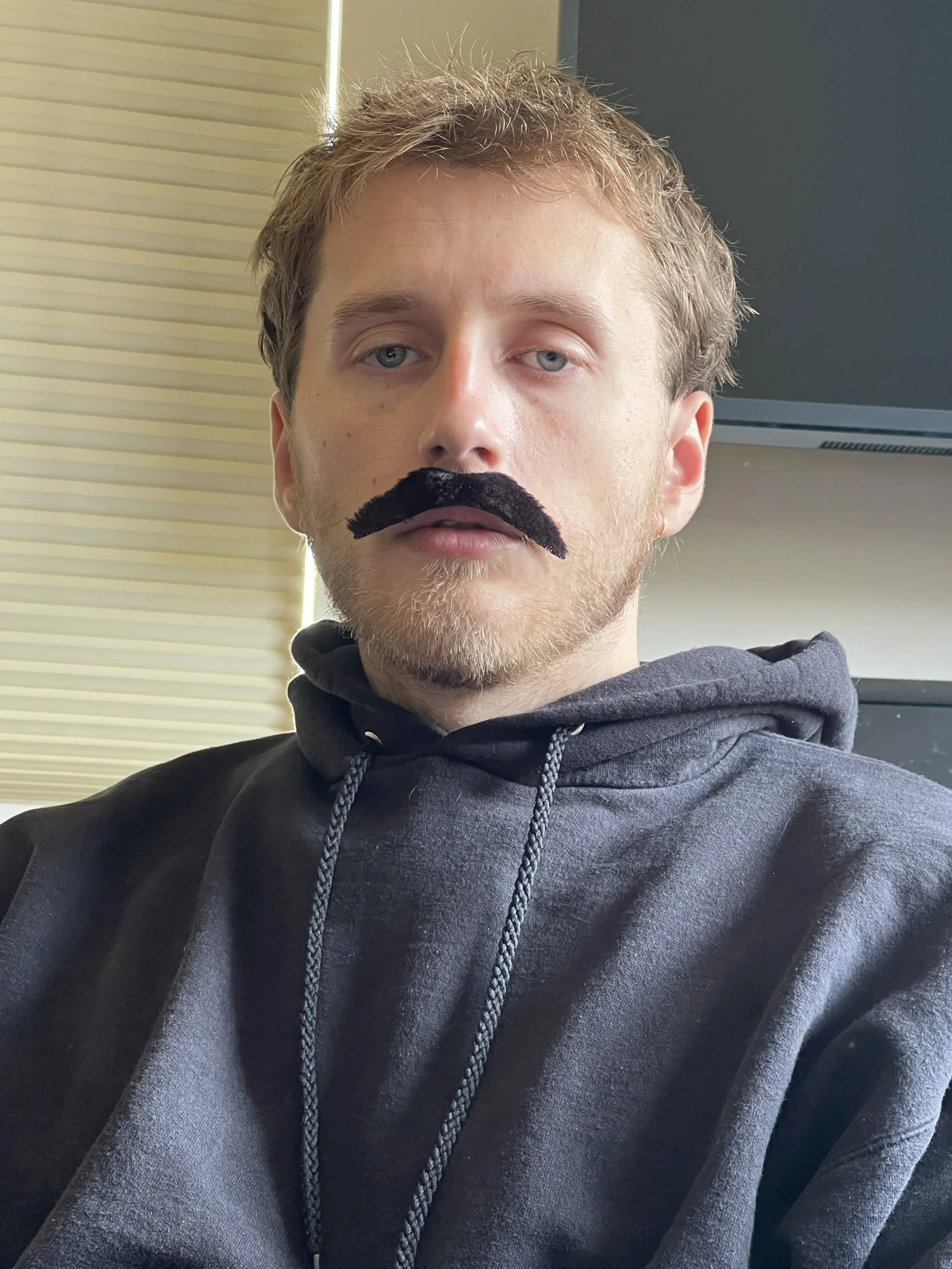
Ben Bird (he/him) is a writer from Southern California. His short fiction can be found in Chicago Quarterly Review, Arkansas International, Catamaran, and elsewhere. He is the winner of the Henry Dumas Prize for Fiction, judged by Bud Smith, and has received support from the Kenyon Review Writers Workshop. He lives in San Diego with his incredible partner, Lora, and their two incredible dogs, Ari and Olive. He’s hard at work on the late stages of a novel, and trying not to die. Find him at birdwritings.com.