
Adam Clay
“Among such Friends”: On friendship, Memory, and Art
“Well, I wish I was in New Orleans
I can see it in my dreams
arm-in-arm down Burgundy
a bottle and my friends and me…”-Tom Waits
It’s 2024, and I’m re-watching the third season of True Detective with Samantha (mostly for location spotting, mostly to see what stands out this time around). It’s strange to spend time with a show you’ve watched a year or two before and remember so little. And also how strange to hear a song for the first time in twenty years and still remember all of the words. Sometimes there’s no sense in what the mind stores away and what the mind forgets. This time around, watching this show set in a city I lived in, the walls of the bar look a touch off, either from time or from set design. It feels like a dream of a place I once knew.
I first met Matt in August of 2001 in Fayetteville, Arkansas; though I don’t remember the details, it was likely at an English department orientation week called “boot camp” – a chance for us to prepare before stepping into the classroom as teachers for the first time. I look back now on those years with a sense of longing, but I would have to guess I was more terrified than anything else. I was deeply introspective and didn’t feel I had the chops to teach (probably because, well, I didn’t). I was barely a few years older than my students. I could write a sentence, but I didn’t know how to teach others to write one. There was something about Matt’s attitude to teaching that allowed me to fake competence until I found my stride. To be fair, Matt loved teaching. Talk to any of his former students and they will tell you he was a life-changing force in the classroom; sitting in my backyard that August with Matt and our friend Shannon the week before classes started, though, Matt professed the students were lucky to have us in the room. And also, he wasn’t there to teach. Sharing a bottle of whiskey with us, Matt professed he was only there in Arkansas (a place he would grow to both love and hate) to write poems. Looking back, I can’t remember how I felt about him in these moments. We didn’t have text messages and now both Matt and Shannon are dead. How strange to be the only person alive from a group of friends. My memory of these moments is the final word, somehow.
Regardless, I have to believe I admired his arrogance and attitude to teaching. Maybe I even coveted it. For Matt, teaching was a means to an end: a way to finance a studio degree we called “worthless,” while at the same time we wrote and read ferociously at all hours of the day. One night, Matt wrote a hundred poems on a typewriter. We fumbled through the canon, reading poets that would develop our tastes and those we didn’t care for. After workshop, we’d usually walk down to JRs for pizza and pool. We’d load the jukebox and play “Sad-Eyed Lady of the Lowlands” over and over again. We talked poetry in and out of class. As a trio, Shannon, Matt, and I were called “the trinity,” with me as the son, Matt as the father, and Shannon as the ghost.
One day at Campus Bookstore on Dickson Street, we found out-of-print copies of Frank Stanford’s Selected Poems. I still have the sticker on mine: marked down to $2.50. The three of us mythologized the grim, stark poems. We mythologized and romanticized, too, Stanford’s suicide at twenty-nine. How could we not? There was something magical about the scarcity of his poems, but we were all drawn to his death and the mystery surrounding it. Jim Whitehead was still alive then, but we didn’t dare ask him about Stanford. On the surface, we would have said that we were terrified of Whitehead, but I also think we loved the mythos of Stanford’s life and work. We loved not knowing why he killed himself, and we loved the prolific poetic output. The two things seemed intertwined somehow. Ask anyone who knew him, but Matt often joked about death and dying young, so much so that his death in 2022 really didn’t surprise me. It was shocking to make sense of the world without him, but it was a reality he had been talking about for years.
In New Orleans a few days before Matt’s death, from Anna’s in the Marigny, I sent him and Shannon a Franz Wright poem via text. Franz had been our teacher briefly at the University of Arkansas and was another poet we mythologized, too. His poems were haunted by death like Stanford’s. This one was about his father and it ended like this:
Give us this day, he mutters,
our daily stone. Nice.
Can’t blame him, though. This morning
can’t sleep for missing him.
Matt’s reply to the thread (and the last I heard from him): “The grammar and prosody of those two lines show how much he knew about poetry.” Quintessential Matt: seeing in the microcosm of the poem a macro statement about the artist. That day in March, Franz had been dead for almost seven years somehow. Somehow, in less than twenty-four hours, Matt would be too.
In my office at work, I write alongside Matt’s poetry collection. In May of 2022 I drove up to Fayetteville to help Samantha cull the prose and some of the poetry, though we kept his library mostly intact. A few days after his death she had asked me: “How soon is too soon to move,” and I told her to do what she needed to do. She took this to heart and started packing up their West Fork home to move back to Fayetteville. They were a short drive from town, but it felt like a world away to a widow with two young children, and no one could blame her for needing a new start. We sorted through the books, and it made me think about the story one’s library can tell, the collecting and culling of books as a marker of one’s own mind. That day the act of packing up the books felt like a funeral of sorts. Matt’s ashes were there on the shelf too, which wasn’t lost on me.
Working now with Matt’s library in my office doesn’t feel ominous, but there is something haunting about those spines and the smell of those books. It takes me back to West Fork, Arkansas, to Dickson Street Bookshop, to many places I’ve been before but also to places I haven’t been yet. There’s this idea that grief is literally the mind trying to make sense of the world absent of a person so integral to it. Grief is certainly about the past but maybe more about the future that won’t happen.
I bring a Larry Levis poem into one of my classes, talking ekphrasis and the ways in which a poem can interact with another work of art. This poem is from Levis’ second posthumous collection, a poem I printed in haste, admittedly. We read a few others, but the Levis poem in response to a Richard Diebenkorn painting left the class silenced for a touch. Something about the turning in, a gesture towards interiority, that the other poems didn’t do. A student says it out loud. The second section of the poem I’ve spent a stretch now just reading, trying to decide what to quote. It’s all one sentence, so only letting part of it appear feels wrong:
Someday I’ll go back to the place depicted
By the painting, boarded over by the layers of paint
And abandoned,
And beneath the pastel yellows I’ll find
The Bayside Motel & the little room
With the thin, rumpled coverlet,
And sit down, drinking nothing but the night air
By the window, & wait for her to finish
Dressing, one earring, then another,
And wait until the objects in the room take back
Their shapes in the dawn,
And wait until
Each rumpled crease in the sheets & pillowcase
Is as clear as a gift again, & wait —
At a certain moment, that room, then all the rooms
Of the empty Bayside,
Will turn completely into light.
I imagine Levis watching our class conversation around a poem he might have never published, a poem most likely left unfinished at the time of his death. Matt had mostly stopped writing in the years before his death, and one of his last poems was titled “Goodbye to Bob Dylan,” written in 2020 in response to a song on Dylan’s Rough and Rowdy Ways. The final stanza he wrote (though certainly not what he intended to be the end of the poem) reads:
The human voice remains mixed
up in these boxes of books the teaching
class pack and unpack squeezed for rent
It’s amazing to think of how the art someone creates can have a life all its own. At its core, I think that’s what Keats’ “Grecian Urn” is about: we live on through the art. It’s cliché and sentimental, I know, but the lives of our creations will always outlive us. The ekphrastic poems I love most are the ones that exist without the painting, almost like a memory based on a past that didn’t happen. Funny to look at the Diebenkorn and see a different world from the one Levis uncovers, one where “…the objects in the room take back / Their shapes in the dawn.”
I first read Larry Levis in Arkansas—I can’t remember the poem, but it was certainly Matt who loaned me his weathered copy of Winter Stars, a book that sits on the shelf in my office now. I loved the book mainly for its wild syntactical moves and its stark imagery, but it’s “Those Graves in Rome” that I return to again and again, though I’m not sure I could have told you quite why back when I first read it. The poem takes the reader to the Protestant Cemetery where John Keats and Percy Shelley are buried along with Joseph Severn and Edward John Trelawny. It’s a poem about friendship and about the eventual end of life. Looking at the poem now, I can see why I loved it as a young poet—it romanticizes the Romantics, but it also romanticizes friendship. The speaker reflects:
I thought, then, that the three of us would be
Indissoluble at the end, & also that
We would all die, of course. And not die.
And maybe we should have joined hands at that
Moment. We didn't.
I love the sentimental honesty of this moment, but more importantly I like that the speaker blurs past and present tense, affording himself the chance to revise the moment, to frame it through the lens of the present. It’s one of the generosities of poetry: it allows us to imagine a version of the past better than what it actually was or could have been.
Later in the poem in the city after a night of excess, the speaker returns to their friendship:
…Among such friends,
Who never allowed anything, still alive,
To die, I'd almost forgotten that what
Most people leave behind them disappears.
The story goes that Percy Shelley’s heart did not burn when he was cremated, and that Mary Shelley kept the heart in her desk drawer until her death. The death of a poet leaves a lot behind—literally and figuratively—and I wonder if Levis was thinking about this in his poem. In Matt’s papers, Samantha and I find slivers of a manuscript in tension with his promise that he’d never publish a book again.
In looking through Shannon’s unfinished manuscript, I stumble across a line that Levis could have written in “Those Graves in Rome”: “What is happiness but not feeling alone.” There’s something really haunting about where the Levis poem goes when the speaker has left his friends:
Three days later, staying alone in a cheap
Hotel in Naples, I noticed a child's smeared
Fingerprints on a bannister. It
Had been indifferently preserved beneath
A patina of varnish applied, I guessed, after
The last war. It seemed I could almost hear
His shout, years later, on that street.
Again, this romantic turn is very Levis, but so too is the way he self-corrects in the next few lines, letting reality dissolve the image of the fingerprints and this imagined child:
But this
Is speculation, & no doubt the simplest fact
Could shame me.
I’ve written poems about Matt. I scroll through our text chain now and then. I flip through his books. The space he inhabits now is the recess of my mind, more and more distant as the days go by. One of his responses to a text I sent, with me lamenting how slow I had been to be in touch and respond: “Time ain’t no thing. I’ll answer when you get there.”
During a trip to Rome in 2016, I remember stepping back from Shelley’s grave and nearly putting my foot on the gravestone of the poet Gregory Corso, a strange sort of lineage I had somehow stumbled upon. I thought about Corso, dying in this century and so many of the other Beat writers gone by that time. Of course, Levis died before Corso, but I wonder what “Those Graves in Rome” would look like if Levis was still alive today. I imagine Corso would show up.
At this midpoint of my own life, I find myself looking back to the poetic lineage I connect with while thinking about the poets to follow. Gregory Corso’s last book found its spark in an elegy written for his dear friend Allen Ginsberg following Ginsberg’s funeral: “Every night of our youth / was one last gaudy night” and “I celebrate my grief with funeral tributes.” Though the elegy is for Ginsberg, it’s hard not to see Corso contemplating his own death in the poem, which he knew would come soon. How can one think about the death of a contemporary without thinking about one’s own mortality? And what to do with the time that’s left? Corso revised his final collection, The Golden Dot, with a newfound energy making the most of the time he had left.
I come across a reading from 1973 where Corso heckles Ginsberg—in a good-spirited way, of course. They go back and forth—it’s performative, but it’s also an insightful look at their deep love and admiration for each other. It makes me think of Matt, who heckled me often, in readings and in life. I remember him in the audience in Fayetteville, Arkansas—the last time he saw me read—in a building that’s now been torn down to make room for condos. I can still see him sitting in the front row, a devilish smile on his face. His death really felt like losing a brother—I would not be the person or poet I am today, if not for him.
In my files, I find a scrap of a poem, with no recollection of writing these lines:
Missing Interiority
Pieces from childhood remain just that—
posed from a question about deep interiority,
deep recall of canyons at the darkest point
of the sea. How much of memory
is simply retelling what others have told
me? Maybe it has more to do with the confidence
of narrative, the sharp detail that places
the mind there, though there’s no wall
to put a word through.
I once had a better memory, and now at midlife, I regret not writing more down. Even now, I don’t know when I wrote this poem—it doesn’t show up on my laptop or in a quick search of my files in the cloud, as though it was placed here at one point by some knot in the machine. Maybe it’s a poem Matt wrote, and it found its way here. There’s some sense in writing down daily moments, in creating art from these words, if it means it might make them just a touch bit more immortal, like that day Levis experienced in the Protestant Cemetery, imagined or not.
James McWilliams published his sprawling epic biography of Frank Stanford earlier this year, and when the advanced review copy arrived this past summer, it hit me hard that I couldn’t talk to Matt about this book we would have so eagerly awaited. Reading through McWilliams’ amazing project, the details of Stanford’s both prolific and destructive life troubled me in a way I hadn’t anticipated, and now I can’t read the poems in the same way knowing what I know. The biography somehow de-mythologized his life, which, perhaps, is what a biography should do. I think of Matt dying in 2022 with the Stanford myth still somehow intact, and maybe that’s how it should be. In the absence of truth, the mind will always create its own.
Samantha and I have gathered Matt’s unpublished poems with the idea of publishing a posthumous collection. He was vocal about not wanting to publish another book, but reading through these poems from a project called The Visitor, it’s hard to not want them in the world. Matt’s time teaching poetry on Death Row in Arkansas was a major influence on his life and his poetry, and there’s a movement in the work towards trying to make sense of a world that confounded him—and continues to confound us, too. In a poem for Samantha, he writes:
We make imaginary math
hoping for a small equation
to spin the world the other way
Though Matt’s no longer physically with us, I love the idea of his poems continuing their life now and in the years to come. Perhaps every poem is a “small equation” and can “to spin the world the other way.” Even now I can hear Matt’s voice in my head making fun of me for something potentially so trite, but he would know I’m right. His poems—unpublished or not—stand as a testament to what art can do in and for a world gone wrong.
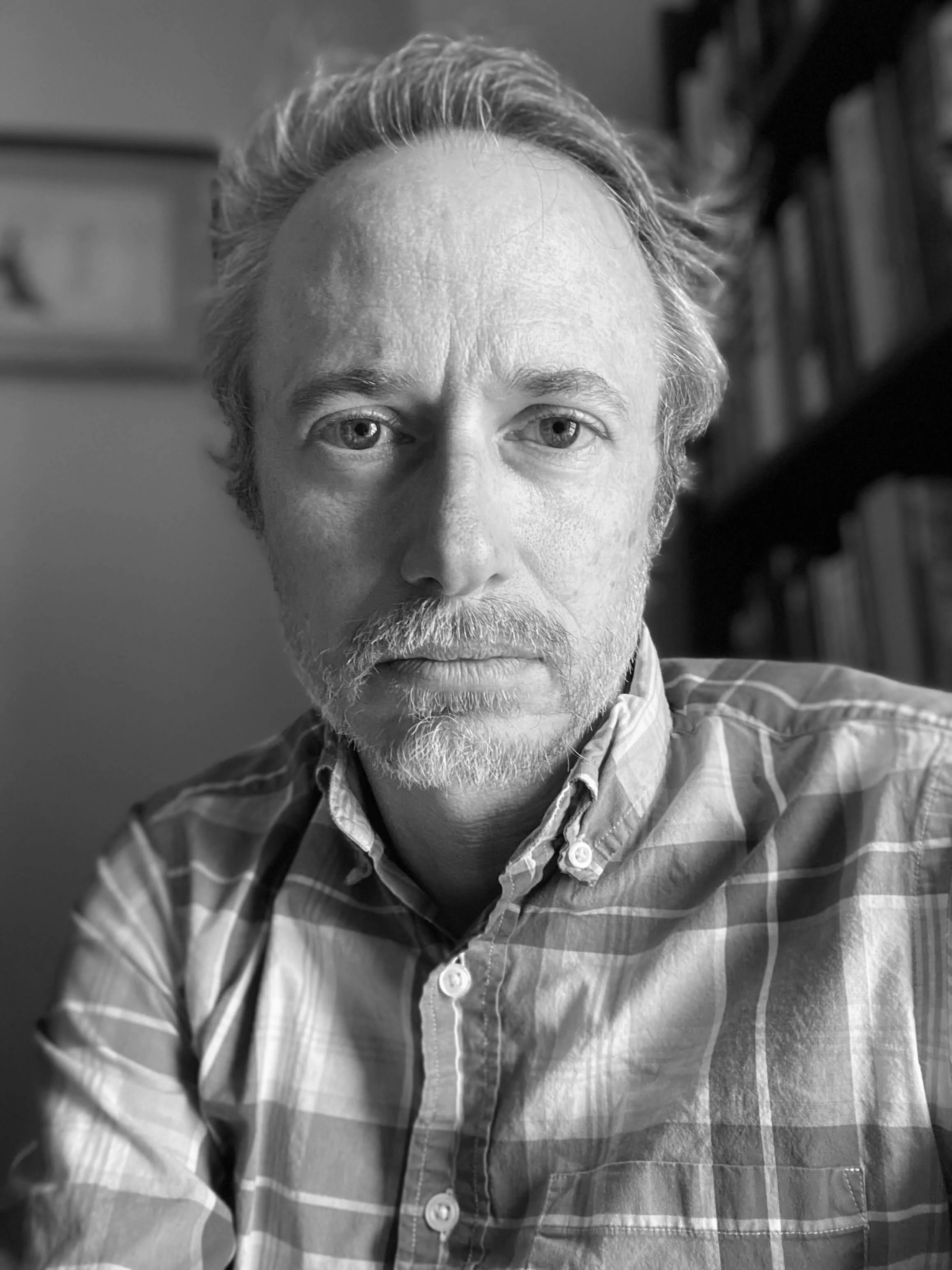
Adam Clay (he/him) is the author of Circle Back (Milkweed Editions, 2024). He teaches at Louisiana State University and edits Autocorrect.